
The 2013 legislative session of the Indiana General Assembly convened today at the Statehouse at 1:30 p.m. It's a long session this year, with April 29 being the last possible day of session. During the long session, the legislature creates Indiana's biennial budget, which consumes the majority of legislators' time, but also, legislators are able to propose more legislation, which means the potential for quite a few more issues to be delved into.
MCCOY will be how children's issues fare this session with topics ranging from creating a commission to improve the status of children in Indiana to addressing early childhood learning and safety to preventing bullying and keeping children safe. Bills are now being posted on the General Assembly's website and MCCOY will be sending out it's first Voices for Indiana's Children legislative update at the end of this week to summarize the bills posted thus far. To receive the newsletter, please click here and choose the "advocacy" mailing list.
Due to redistricting and the elections, your legislator may have changed. Please visit the General Assembly's District Look-up Page to find out who represents you in the statehouse. Reach out and make contact with your legislator - they would love to hear from their constituents on the important issues that they will grapple with this year.
Stay tuned for periodic updates as the session moves forward!
Showing posts with label Education. Show all posts
Showing posts with label Education. Show all posts
Monday, January 7, 2013


Friday, November 16, 2012
Written by:
Danielle Guerin, AmeriCorps VISTA
“When I
think about education, I feel it’s important that an individual grabs this
opportunity. If not, I believe that they will not be prepared for the world
around them. Education is a must in a world that is changing every day.”
That is one
of the most poignant quotes that came out of Real Talk Remix, a youth
roundtable discussion, which was held this past October. The event was held in
partnership with WFYI’s American Graduate program. 16 youth, from 5th
to 12th grade, came together to talk about education and what needed
to be changed.
The youth
came up with their three biggest issues
in school:
- Structure of the education system
- Teacher-student communication
- Bullying and safety in schools
Attendees of
Real Talk Remix had many suggestions for the improvement of their education
experience. From concerns with student/teacher/counselor relationships, to
student-student bullying issues to the overall structure of curriculum of schools,
these youth believe we can do better. The youth who attended the event left with
new ideas about what they could do to make their schools better. MCCOY came up
with the following next steps:
•The Youth Advocacy Council will incorporate
what they heard from peers into their working groups on education reform and bullying.
They will advocate on these issues in the coming year through tracking
legislation on the topics in the state legislature and hosting "listening
sessions" for youth to voice their concerns on the issues of bullying and
education reform.
• MCCOY will incorporate youth feedback
into our 2013 Legislative Priorities
of education, bullying, and youth violence. Focusing on the following
priorities:
- Embrace a comprehensive evidence-based approach to prevent all forms of peer aggression, including bullying, gangs, dating violence and suicide that provide resources and training to all school personnel and that foster school environments and interactions that promote positive social skill development
- Re-engage disconnected youth and adults in education and career-focused opportunities
•If you'd
like access to the full Real Talk Remix agenda and format to host your own Real Talk, email Danielle
Guerin.
To view the
full report, go here.
Tuesday, February 28, 2012
They Say We Stand For Nothing and There’s No Way We Ever Could
The past month I have been so involved in democracy that I dream about bills and manage to turn every conversation into one about legislation. It’s annoying and yet I’m hooked. I soak it all up. Yesterday I attended COBI—Children…Our Best Investment, which is a day where students can hear speakers talk about current issues, form messages for their legislators, have lunch with Senators and Representatives, and go to the Statehouse for tours and conversations with legislators. I was so impressed to see young people soaking it up just like I do.

They asked panelists tough questions that forced them to get to the heart of the issues. When legislators came to lunch, they brought up problems in education that they are facing and asked how the current bills are going to address the issues. If answers from panelists or legislators were not up to snuff, they said, “But what about this…” Everything from gang activity in schools, to undocumented immigrants getting a college education, to how far schools can go in suspending and expelling students, to restructuring the Indianapolis Public School system were brought up and spoken about not only with passion, but with poise, knowledge, and confidence.
At the Statehouse later in the day I saw students talking with their legislators, grilling legislative assistants about how they got their jobs and what degree was needed, and introducing themselves as “Future Senator So-and-So” and “Future Governor”.
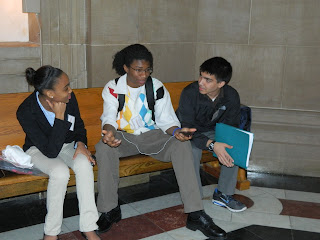
If this is the face of Indiana’s future, we are in good hands. These high school students want to know the answers. They ask good questions. They’re not interested in simply identifying a problem; they’re interested in coming up with solutions and making them happen. I’m confident that even in a highly partisan political climate that is discouraging many, these students will keep their drive and optimism and become great leaders.
One day our generation is gonna rule the population, so stop Waiting on the World to Change. These youth did.
Interested in having your voice heard? Join MCCOY’s Youth Advocacy Council.
Want to stay updated on the legislative session and other advocacy updates? Follow MCCOY_Advocacy on Twitter.

They asked panelists tough questions that forced them to get to the heart of the issues. When legislators came to lunch, they brought up problems in education that they are facing and asked how the current bills are going to address the issues. If answers from panelists or legislators were not up to snuff, they said, “But what about this…” Everything from gang activity in schools, to undocumented immigrants getting a college education, to how far schools can go in suspending and expelling students, to restructuring the Indianapolis Public School system were brought up and spoken about not only with passion, but with poise, knowledge, and confidence.
 |

If this is the face of Indiana’s future, we are in good hands. These high school students want to know the answers. They ask good questions. They’re not interested in simply identifying a problem; they’re interested in coming up with solutions and making them happen. I’m confident that even in a highly partisan political climate that is discouraging many, these students will keep their drive and optimism and become great leaders.
One day our generation is gonna rule the population, so stop Waiting on the World to Change. These youth did.
Interested in having your voice heard? Join MCCOY’s Youth Advocacy Council.
Want to stay updated on the legislative session and other advocacy updates? Follow MCCOY_Advocacy on Twitter.
Friday, February 3, 2012
February 3 Legislative Update
This week marked the deadline for bills to crossover to the other chamber and business was concluded on Wednesday. Both houses are slated to reconvene on Tuesday and committee meeting agendas are already being posted for next week. Because of the contentious nature of the Right to Work debate, a great deal of time was devoted to debating or avoiding the debate of the issue. This resulted in less time for other bills to be heard, but still, a good number related to children made it through.
The legislature is now taking some time off due to the Super Bowl festivities. For advocates, this means some time to catch our collective breath and plan strategy for the remainder of the session. MCCOY is in the process of identifying which bills to hone in on. If you see any of interest or concern to you or your organization, please let us know and we will be more than happy to work with you to navigate the process. Below is an update of those bills that either passed or failed the first house. To view the complete information and text of the bills, click here.
Select House Education Bills
HB1134 Various education matters (Speedy, DeLaney)
This bill is related to public schools providing transportation at no cost to parents. It passed the House 92-2 and Senator Miller is the Senate sponsor. MCCOY's position: monitor
HB1136 Child care ministry advisory committee (Wesco)
Requires the division of family resources to establish a child care ministries advisory committee. This bill passed the House 91-1 and Senator Holdman is the Senate sponsor. MCCOY's position: support
HB1150 Family Friendly school designation (Sullivan, VanDenburgh)
Establishes the Indiana family friendly school designation program. This bill passed the House 98-0 and Senators Kruse, Simpson and Rogers are the Senate sponsors. MCCOY's position: support
HB1169 School discipline (Koch)
This bill passed the House 72-22 and Senator Kruse is the Senate sponsor. MCCOY has some serious concerns about the nature of this bill. While the bill's author, Rep. Koch, has explained that the purpose is to give schools disciplinary options for cyberbullying and cheating that occurs during off-school hours and off of school property, the language is not specific and leaves a school's discretion wide open in terms of what they can suspend or expel a studnet for. Given our already high rates of suspensions and expulsions in this state, and the disproportionate rates of minorities involved in those cases, MCCOY feels that the language should be tweaked to reflect the more specific intent of the bill. MCCOY's position: oppose as written
HB1189 Multiple ADM counts (Thompson)
Provides that ADM counts occur twice during the school year. This bill passed the House 82-14 and Senators Charbonneau and Rogers are the Senate sponsors. MCCOY's position: monitor
HB1219 Parental initiatives for school reorganization (Rhoads, Behning)
This bill died on the House floor - it did not make it through 2nd reading.
HB1324 School accountability and turnaround academies (Behning)
This bill died on the House floor - it did not make it through 2nd reading.
HB1326 Various education matters (Rhodes, Behning)
This bill passed the House 79-17 and Senator Yoder is the Senate sponsor. MCCOY's position: monitor
Select House Child Welfare & Safety Bills
HB1007 Drug testing of public assistance recipients (McMillin)
This bill was brought back for 2nd reading after being withdrawn. It was amended to be a pilot program for 3 counties and does include language for random drug testing for legislators. It passed the House 73-23 and Senators Head and Banks are the Senate sponsors. MCCOY has serious concerns about the implications for children in this bill and will be working with our partners to express those concerns. MCCOY's position: oppose
HB1204 Sex offender registry (Dermody)
This bill passed the House 93-0 and Senators Steele and Arnold are the Senate sponsors. MCCOY's position: monitor
HB1365 Dual juvenile and criminal jurisdiction (McNamara, Steuerwald, Dermody)
This bill passed the House 93-0 and Senators Steele and Arnold are the Senate sponsors. MCCOY's position: support
Select Senate Education, Early Childhood & Child Care Bills
SB83 Cursive writing in school curriculum (Leising)
This bill passed the Senate 45-5 and Representative Rhoads is the House sponsor. MCCOY's position: monitor
SB89 Teaching of the origin of life (Kruse, Holdman)
This bill was amended to state that schools may teach various religious theories of the creation of life, not just the Judeo-Christian view. This bill passed the Senate 28-22 and Representative Thompson is the House sponsor. MCCOY position: monitor
SB179 Virtual instruction course requirement (Banks, Kruse)
This bill was amended to require the Department of Education to conduct an audit of a school's capability and capacity to offer on-line instruction. This bill passed the Senate 38-12 and Representative Heuer is the House sponsor. MCCOY's position: support
SB198 Choice scholarship eligibility (Eckerty, Walker)
This bill was reassigned to Appropriations and did not move on to 2nd reading.
SB236 Various education matters (Delph, Kruse, Schneider)
This bill failed the Senate for lack of a constitutional majority (25-25).
SB248 Balanced school calendar (Leising)
This bill was amended to create an interim study committee to examine the use of balanced school calendars and procedures for the implementation or discontinuance of the use of balanced school calendars. This bill passed the Senate 36-13 and Representative Rhoads is the House sponsor. MCCOY position: support
SB265 School report card (Head)
This bill passed the Senate 50-0 and Representative Koch is the House sponsor. MCCOY will be looking into this bill further to determine it's implications for schools and students. MCCOY's position: monitor
SB267 Education concerning child abuse (Rogers)
This bill passed the Senate 50-0 and Representative Behning is the House sponsor. MCCOY's position: support
SB268 Advisory committee on early education (Rogers)
This bill passed the Senate 42-8 and representative Behning is the House sponsor. MCCOY's position: support
SB283 Nonpublic alternative high schools; residential facilities (Kruse)
This bill was slightly amended to require the Department of Education to waive accreditation standards for an accredited nonpublic alternative high school that contracts with a school corporation to provide alternative education services for students who have (1) dropped out of high school; (2) been expelled; or (3) were not successful in the school corporation. This bill passed the Senate 48-2 and Representative Thompson is the House sponsor. MCCOY's position: monitor
SB296 Certified scholarship program eligibility (Leising)
This bill passed the Senate 34-16 and Representative Behning is the House sponsor. MCCOY's position: monitor
SB312 School policies on gang activities (Hershman)
This bill passed the Senate 50-0 and Represenative Timothy Brown is the House sponsor. While MCCOY supports the provisions of the bill pertaining to prevention, education and awareness for schools, there is some concern about the implications of the loose definition of "criminal gang" and "criminal gang activity" in Indiana's criminal code and how this bill could widen the net for more youth, particularly minority youth, to be inappropriately labeled as gang members. The bill also includes language about reporting suspected gang members that is arbitrary and subjective. MCCOY's position: support with amendments
SB331 Choice scholarship eligibility (Yoder)
This bill died in committee.
Select Senate Child Welfare & Safety Bills
SB4 Human Trafficking (Head, Banks, Walker)
This bill was signed into law by Govenor Mitch Daniels on January 30th.
SB190 Termination of parent-child relationship (Charbonneau)
This bill passed the Senate 44-6 and Representative Clere is the House sponsor. MCCOY's position: monitor
SB286 Department of child services (C. Lawson)
This bill passed the Senate 50-0 and Representative McNamara is the House sponsor.
SB287 Department of child services (C. Lawson)
This bill passed the Senate 48-0 and has been referred to the House Committee on Family, Children and Human Affairs. Representative McNamara is the House sponsor.
The legislature is now taking some time off due to the Super Bowl festivities. For advocates, this means some time to catch our collective breath and plan strategy for the remainder of the session. MCCOY is in the process of identifying which bills to hone in on. If you see any of interest or concern to you or your organization, please let us know and we will be more than happy to work with you to navigate the process. Below is an update of those bills that either passed or failed the first house. To view the complete information and text of the bills, click here.
Select House Education Bills
HB1134 Various education matters (Speedy, DeLaney)
This bill is related to public schools providing transportation at no cost to parents. It passed the House 92-2 and Senator Miller is the Senate sponsor. MCCOY's position: monitor
HB1136 Child care ministry advisory committee (Wesco)
Requires the division of family resources to establish a child care ministries advisory committee. This bill passed the House 91-1 and Senator Holdman is the Senate sponsor. MCCOY's position: support
HB1150 Family Friendly school designation (Sullivan, VanDenburgh)
Establishes the Indiana family friendly school designation program. This bill passed the House 98-0 and Senators Kruse, Simpson and Rogers are the Senate sponsors. MCCOY's position: support
HB1169 School discipline (Koch)
This bill passed the House 72-22 and Senator Kruse is the Senate sponsor. MCCOY has some serious concerns about the nature of this bill. While the bill's author, Rep. Koch, has explained that the purpose is to give schools disciplinary options for cyberbullying and cheating that occurs during off-school hours and off of school property, the language is not specific and leaves a school's discretion wide open in terms of what they can suspend or expel a studnet for. Given our already high rates of suspensions and expulsions in this state, and the disproportionate rates of minorities involved in those cases, MCCOY feels that the language should be tweaked to reflect the more specific intent of the bill. MCCOY's position: oppose as written
HB1189 Multiple ADM counts (Thompson)
Provides that ADM counts occur twice during the school year. This bill passed the House 82-14 and Senators Charbonneau and Rogers are the Senate sponsors. MCCOY's position: monitor
HB1219 Parental initiatives for school reorganization (Rhoads, Behning)
This bill died on the House floor - it did not make it through 2nd reading.
HB1324 School accountability and turnaround academies (Behning)
This bill died on the House floor - it did not make it through 2nd reading.
HB1326 Various education matters (Rhodes, Behning)
This bill passed the House 79-17 and Senator Yoder is the Senate sponsor. MCCOY's position: monitor
Select House Child Welfare & Safety Bills
HB1007 Drug testing of public assistance recipients (McMillin)
This bill was brought back for 2nd reading after being withdrawn. It was amended to be a pilot program for 3 counties and does include language for random drug testing for legislators. It passed the House 73-23 and Senators Head and Banks are the Senate sponsors. MCCOY has serious concerns about the implications for children in this bill and will be working with our partners to express those concerns. MCCOY's position: oppose
HB1204 Sex offender registry (Dermody)
This bill passed the House 93-0 and Senators Steele and Arnold are the Senate sponsors. MCCOY's position: monitor
HB1365 Dual juvenile and criminal jurisdiction (McNamara, Steuerwald, Dermody)
This bill passed the House 93-0 and Senators Steele and Arnold are the Senate sponsors. MCCOY's position: support
Select Senate Education, Early Childhood & Child Care Bills
SB83 Cursive writing in school curriculum (Leising)
This bill passed the Senate 45-5 and Representative Rhoads is the House sponsor. MCCOY's position: monitor
SB89 Teaching of the origin of life (Kruse, Holdman)
This bill was amended to state that schools may teach various religious theories of the creation of life, not just the Judeo-Christian view. This bill passed the Senate 28-22 and Representative Thompson is the House sponsor. MCCOY position: monitor
SB179 Virtual instruction course requirement (Banks, Kruse)
This bill was amended to require the Department of Education to conduct an audit of a school's capability and capacity to offer on-line instruction. This bill passed the Senate 38-12 and Representative Heuer is the House sponsor. MCCOY's position: support
SB198 Choice scholarship eligibility (Eckerty, Walker)
This bill was reassigned to Appropriations and did not move on to 2nd reading.
SB236 Various education matters (Delph, Kruse, Schneider)
This bill failed the Senate for lack of a constitutional majority (25-25).
SB248 Balanced school calendar (Leising)
This bill was amended to create an interim study committee to examine the use of balanced school calendars and procedures for the implementation or discontinuance of the use of balanced school calendars. This bill passed the Senate 36-13 and Representative Rhoads is the House sponsor. MCCOY position: support
SB265 School report card (Head)
This bill passed the Senate 50-0 and Representative Koch is the House sponsor. MCCOY will be looking into this bill further to determine it's implications for schools and students. MCCOY's position: monitor
SB267 Education concerning child abuse (Rogers)
This bill passed the Senate 50-0 and Representative Behning is the House sponsor. MCCOY's position: support
SB268 Advisory committee on early education (Rogers)
This bill passed the Senate 42-8 and representative Behning is the House sponsor. MCCOY's position: support
SB283 Nonpublic alternative high schools; residential facilities (Kruse)
This bill was slightly amended to require the Department of Education to waive accreditation standards for an accredited nonpublic alternative high school that contracts with a school corporation to provide alternative education services for students who have (1) dropped out of high school; (2) been expelled; or (3) were not successful in the school corporation. This bill passed the Senate 48-2 and Representative Thompson is the House sponsor. MCCOY's position: monitor
SB296 Certified scholarship program eligibility (Leising)
This bill passed the Senate 34-16 and Representative Behning is the House sponsor. MCCOY's position: monitor
SB312 School policies on gang activities (Hershman)
This bill passed the Senate 50-0 and Represenative Timothy Brown is the House sponsor. While MCCOY supports the provisions of the bill pertaining to prevention, education and awareness for schools, there is some concern about the implications of the loose definition of "criminal gang" and "criminal gang activity" in Indiana's criminal code and how this bill could widen the net for more youth, particularly minority youth, to be inappropriately labeled as gang members. The bill also includes language about reporting suspected gang members that is arbitrary and subjective. MCCOY's position: support with amendments
SB331 Choice scholarship eligibility (Yoder)
This bill died in committee.
Select Senate Child Welfare & Safety Bills
SB4 Human Trafficking (Head, Banks, Walker)
This bill was signed into law by Govenor Mitch Daniels on January 30th.
SB190 Termination of parent-child relationship (Charbonneau)
This bill passed the Senate 44-6 and Representative Clere is the House sponsor. MCCOY's position: monitor
SB286 Department of child services (C. Lawson)
This bill passed the Senate 50-0 and Representative McNamara is the House sponsor.
SB287 Department of child services (C. Lawson)
This bill passed the Senate 48-0 and has been referred to the House Committee on Family, Children and Human Affairs. Representative McNamara is the House sponsor.
Friday, January 20, 2012
January 20, 2012 Legislative Update
The 2012 legislative session is off and running. Below is a list of bills that MCCOY is following and that have either been heard in committee or are scheduled to be heard. Given the controversy surrounding the Right to Work bill, many bills are still on hold because the House cannot convene and many committee meetings have been rescheduled. To read the bill digests or the bills themselves, please visit http://www.in.gov/apps/lsa/session/billwatch/billinfo?year=2012&session=1&request=all and enter the bill number.
HB1019 Adoption history information. This bill has moved on to the Senate. It passed the third reading 94 Yes 0 No. The Senate sponsor is Senator Broden.
HB1150 Family friendly school designation. This was amended and passed in committee 11 Yes 0 No on 1/17/12
HB1189 Multiple ADM counts. This was amended and passed in committee 12 Yes 0 No on 1/17/12
HB1326 Various education matters. Committee hearing Friday January 20, 2012 8:30am COMPLETE TESTIMONY AND VOTE
HB1324 School accountability and turnaround academies. Committee hearing Friday January 20, 2012 8:30am
SB4 human trafficking. This bill has had a lot of process and support from both sides. This bill went quickly through the senate and passed 48 to 0. Rep. Steuerwald is the House sponsor, with Reps. Foley, L. Lawson, and Welch as the Cosponsors. Several Representatives from both parties were added as coauthors. It was referred to the Committee on Courts and Criminal Code and has aHouse Committee hearing Friday January 20, 2012 at 10:30am. It is moving so quickly, presumably, so it will be passed before the Superbowl. It is effective upon passage.
SB179 Virtual instruction course requirement. Senator Schneider added as coauthor on 1/19/12Heard in committee on 1/18/12
SB236 Various education matters. Heard in committee on 1/18/12
SB248 Referendum on use of balanced school calendar. Committee hearing Monday January 23, 2012 10am
SB265 School report card. Senator Yoder added as coauthor on 1/17/12Heard in committee on 1/18/12
SB267 Education concerning child abuse. Senator Kruse added as second author 1/17/12Heard in committee on 1/18/12
SB268 Advisory committee on early education. Senator Kruse added as second author 1/17/12Heard in committee on 1/18/12
Please stay tuned for more weekly updates as the session continues. If you have any questions, please e-mail Mindi Goodpaster.
HB1019 Adoption history information. This bill has moved on to the Senate. It passed the third reading 94 Yes 0 No. The Senate sponsor is Senator Broden.
HB1150 Family friendly school designation. This was amended and passed in committee 11 Yes 0 No on 1/17/12
HB1189 Multiple ADM counts. This was amended and passed in committee 12 Yes 0 No on 1/17/12
HB1326 Various education matters. Committee hearing Friday January 20, 2012 8:30am COMPLETE TESTIMONY AND VOTE
HB1324 School accountability and turnaround academies. Committee hearing Friday January 20, 2012 8:30am
SB4 human trafficking. This bill has had a lot of process and support from both sides. This bill went quickly through the senate and passed 48 to 0. Rep. Steuerwald is the House sponsor, with Reps. Foley, L. Lawson, and Welch as the Cosponsors. Several Representatives from both parties were added as coauthors. It was referred to the Committee on Courts and Criminal Code and has aHouse Committee hearing Friday January 20, 2012 at 10:30am. It is moving so quickly, presumably, so it will be passed before the Superbowl. It is effective upon passage.
SB179 Virtual instruction course requirement. Senator Schneider added as coauthor on 1/19/12Heard in committee on 1/18/12
SB236 Various education matters. Heard in committee on 1/18/12
SB248 Referendum on use of balanced school calendar. Committee hearing Monday January 23, 2012 10am
SB265 School report card. Senator Yoder added as coauthor on 1/17/12Heard in committee on 1/18/12
SB267 Education concerning child abuse. Senator Kruse added as second author 1/17/12Heard in committee on 1/18/12
SB268 Advisory committee on early education. Senator Kruse added as second author 1/17/12Heard in committee on 1/18/12
Please stay tuned for more weekly updates as the session continues. If you have any questions, please e-mail Mindi Goodpaster.
Thursday, May 26, 2011
2011 General Assembly Recap
The 2011 legislative session is now over and the bills have been enacted. It was an incredibly interesting session to watch, especially for me as this is my first year getting involved in advocacy in Indiana. Some of the measures passed will do great things for youth and some will need to be watched to see what their full impact will be. Here is a brief summary of some of the bills that passed that MCCOY was following.
Education Reform
SEA 1 (P.L. 90-2011) Teacher evaluations and licensing - links the effectiveness of teachers, in addition to other factors, to student performance. Also has provisions defining "attend," policies outlining excused vs. unexcused absences, parent notification and reporting of habitually absent students to Juvenile Court or the Department of Child Services.
SEA85 (P.L. 142-2011) Education issues study committee - establishes an interim study committee to look at the causes of low graduation rates, best practices to increase graduation rates and the impact of school counselors, teachers, administrators and parents on grad. rates.
SB497 Higher education scholarship - inserted into the budget bill - provides a $4,000 Mitch Daniels Early Graduation Scholarship for high school students graduating earlier than senior year for an approved post-secondary education institution within Indiana.
HEA1002 (P.L. 91-2011) Charter schools - increases the number and types of entities that can sponsor charter schools, adds accountability measures and delineates that only 90% of teachers must possess a license.
HEA1003 (P.L. 92-2011) School scholarships - provides a $1,000 tax deduction for parents who home school their children or send them to a private school and provides scholarships to help cover private school tuition to students in families meeting certain financial requirements.
Full-day kindergarten funding - provides schools access to additional full-day kindergarten grants.
Prevention
SEA4 (P.L. 93-2011) Suicide prevention training for school personnel - provides that teachers should be trained in evidence-based suicide prevention and recognition of signs that a student may be considering suicide. After June 30, 2013, any person applying for a teaching license must be trained in suicide prevention.
HEA1083 (P.L. 180-2011) Various criminal law matters - provides that schools may offer classes, instruction or programs regarding the risks and consequences of "sexting." Also mandates that schools must include provisions against cyber-bullying in their discipline policies.
HEA1107 (P.L. 183-2011) Preventative programs for at-risk children - provides that a juvenile court may create a voluntary preventative program for at-risk children.
Over the next month, MCCOY will be watching the calendar of the Interim Study Committees and will post periodic updates as they progress. Please stay tuned. As always, if you have any questions or would like more information, please contact me. Thank you for your dedication to advocacy!
Education Reform
SEA 1 (P.L. 90-2011) Teacher evaluations and licensing - links the effectiveness of teachers, in addition to other factors, to student performance. Also has provisions defining "attend," policies outlining excused vs. unexcused absences, parent notification and reporting of habitually absent students to Juvenile Court or the Department of Child Services.
SEA85 (P.L. 142-2011) Education issues study committee - establishes an interim study committee to look at the causes of low graduation rates, best practices to increase graduation rates and the impact of school counselors, teachers, administrators and parents on grad. rates.
SB497 Higher education scholarship - inserted into the budget bill - provides a $4,000 Mitch Daniels Early Graduation Scholarship for high school students graduating earlier than senior year for an approved post-secondary education institution within Indiana.
HEA1002 (P.L. 91-2011) Charter schools - increases the number and types of entities that can sponsor charter schools, adds accountability measures and delineates that only 90% of teachers must possess a license.
HEA1003 (P.L. 92-2011) School scholarships - provides a $1,000 tax deduction for parents who home school their children or send them to a private school and provides scholarships to help cover private school tuition to students in families meeting certain financial requirements.
Full-day kindergarten funding - provides schools access to additional full-day kindergarten grants.
Prevention
SEA4 (P.L. 93-2011) Suicide prevention training for school personnel - provides that teachers should be trained in evidence-based suicide prevention and recognition of signs that a student may be considering suicide. After June 30, 2013, any person applying for a teaching license must be trained in suicide prevention.
HEA1083 (P.L. 180-2011) Various criminal law matters - provides that schools may offer classes, instruction or programs regarding the risks and consequences of "sexting." Also mandates that schools must include provisions against cyber-bullying in their discipline policies.
HEA1107 (P.L. 183-2011) Preventative programs for at-risk children - provides that a juvenile court may create a voluntary preventative program for at-risk children.
Over the next month, MCCOY will be watching the calendar of the Interim Study Committees and will post periodic updates as they progress. Please stay tuned. As always, if you have any questions or would like more information, please contact me. Thank you for your dedication to advocacy!
Friday, March 25, 2011
Legislative Update 3/25/11
Rather than post an update today about the little activity in the Statehouse, I thought instead that I would share an interesting column by Matthew Tully in today's Star. MCCOY shares his concern that all of the conversations currently occuring about education reform don't have much of a child-centered focus. Just some food for thought.
Tully: Children deserve serious debate on education reform
Being an optimist, I honestly and naively thought that by now the debate over education reform would have grown less divisive. After all, the goals of better schools and more opportunities for children should be the rare issue with the power to force a spirit of cooperation into the political debate.
No, I didn't expect the various factions involved to cave on their core issues. But with recent bipartisan federal education debates backing up my theory, I thought this could be one issue that was battled on a higher plane.
OK, so I was wrong.
The legislative debate has been underwhelming. That's largely because the House Democrats whose districts include many of the state's most endangered schools have not participated in the discussion, and because Republicans insisted on wasting time this session on wedge issues that were guaranteed from the start to pollute the Statehouse mood.
Additionally, the teachers unions have used their might to tarnish reformers and the sensible and much-needed changes they are proposing.
It's been disappointing.
But it's not too late.
Someday, I assume, Democrats will return from Illinois and the legislature will get around to finishing the session's education debate. Instead of more protests, poison pills and exaggerations, here's an idea: Let's have a debate that is worthy of the state's schoolchildren. Let's stop acting as if there are easy fixes, or that the status quo is even close to acceptable, and judge legislation on one question: whether it will lead to better classrooms and schools for Indiana's children.
Along the way, those pushing for reform need to make a stronger public case for bills they support -- bills that would, among other things, expand the network of charter schools, tie teacher and principal evaluations more to student performance and reduce the role seniority plays when it comes to layoffs and other teacher moves.
Legislative Democrats who insist they support these measures need to speak up now. If they don't, if they continue to shrink in fear of angering party bosses, they will have permanently lost their credibility on the issue of education reform.
Top Republicans, meanwhile, need to begin patching the massive rift between them and teachers. In a recent conversation, Superintendent of Public Instruction Tony Bennett told me he is paying for the "flame throwing" ways he displayed during the first year of his term. He spends a lot of time talking to teachers these days but must convince more of them that while he is committed to increasing teacher quality, he is also on the side of the thousands of teachers who courageously do their jobs every day.
Parents and other taxpayers have a role to play, too. It's to pay attention to a debate that could help shape the future of the city and state -- and, most important, of many students.
House Democrats will return to work eventually. When they do, the debate over education reform will resume. Hopefully the second half of this debate will be more worthy of Indiana students than the first.
Tully: Children deserve serious debate on education reform
Being an optimist, I honestly and naively thought that by now the debate over education reform would have grown less divisive. After all, the goals of better schools and more opportunities for children should be the rare issue with the power to force a spirit of cooperation into the political debate.
No, I didn't expect the various factions involved to cave on their core issues. But with recent bipartisan federal education debates backing up my theory, I thought this could be one issue that was battled on a higher plane.
OK, so I was wrong.
The legislative debate has been underwhelming. That's largely because the House Democrats whose districts include many of the state's most endangered schools have not participated in the discussion, and because Republicans insisted on wasting time this session on wedge issues that were guaranteed from the start to pollute the Statehouse mood.
Additionally, the teachers unions have used their might to tarnish reformers and the sensible and much-needed changes they are proposing.
It's been disappointing.
But it's not too late.
Someday, I assume, Democrats will return from Illinois and the legislature will get around to finishing the session's education debate. Instead of more protests, poison pills and exaggerations, here's an idea: Let's have a debate that is worthy of the state's schoolchildren. Let's stop acting as if there are easy fixes, or that the status quo is even close to acceptable, and judge legislation on one question: whether it will lead to better classrooms and schools for Indiana's children.
Along the way, those pushing for reform need to make a stronger public case for bills they support -- bills that would, among other things, expand the network of charter schools, tie teacher and principal evaluations more to student performance and reduce the role seniority plays when it comes to layoffs and other teacher moves.
Legislative Democrats who insist they support these measures need to speak up now. If they don't, if they continue to shrink in fear of angering party bosses, they will have permanently lost their credibility on the issue of education reform.
Top Republicans, meanwhile, need to begin patching the massive rift between them and teachers. In a recent conversation, Superintendent of Public Instruction Tony Bennett told me he is paying for the "flame throwing" ways he displayed during the first year of his term. He spends a lot of time talking to teachers these days but must convince more of them that while he is committed to increasing teacher quality, he is also on the side of the thousands of teachers who courageously do their jobs every day.
Parents and other taxpayers have a role to play, too. It's to pay attention to a debate that could help shape the future of the city and state -- and, most important, of many students.
House Democrats will return to work eventually. When they do, the debate over education reform will resume. Hopefully the second half of this debate will be more worthy of Indiana students than the first.
Friday, February 25, 2011
Legislative Update 2/25/11
Aside from the walkout by the House Democrats this week, there have been some interesting things happening at the Statehouse in the past two weeks. The controversial immigration bill passed the Senate and is on its way to the House, albeit with some changes. The equally controversial teacher evaluation and licensing bill has also moved on to the House and the unions are packing the Statehouse to protest the Right to Work legislation.
With regard to youth, there are some good and not so good things happening. First, SB 56 Child Care Regulation was not held for vote and is therefore dead for this session. Senator Miller explained that she has not heard enough "compelling" evidence to prove the need for state regulation of church-based childcare ministries. Also, SB538 Bullying Prevention was defeated in committee - a surprising move to most child advocates. Reasoning had to do with an already over-burdened education system and concern that the bill promoted gay rights.
Both SB 4 and HB 1019, dealing with youth suicide prevention, have crossed over to their respective houses. Given the support that both bills have seen, despite being amended, it is likely that this issue will have success in this session - a very positive outcome for our youth.
Finally, HB 1566 School Absenteeism and Dropouts (Porter) passed committee on Monday. This bill will:
With regard to youth, there are some good and not so good things happening. First, SB 56 Child Care Regulation was not held for vote and is therefore dead for this session. Senator Miller explained that she has not heard enough "compelling" evidence to prove the need for state regulation of church-based childcare ministries. Also, SB538 Bullying Prevention was defeated in committee - a surprising move to most child advocates. Reasoning had to do with an already over-burdened education system and concern that the bill promoted gay rights.
Both SB 4 and HB 1019, dealing with youth suicide prevention, have crossed over to their respective houses. Given the support that both bills have seen, despite being amended, it is likely that this issue will have success in this session - a very positive outcome for our youth.
Finally, HB 1566 School Absenteeism and Dropouts (Porter) passed committee on Monday. This bill will:
- Require schools to report chronic absenteeism to the DOE, identify contributing factors to absenteeism and develop chronic absenteeism reduction plans.
- Directs the education roundtable to study and make recommendations concerning early childhood education.
- Allows school corporations to contract with nonprofit entities to provide health care services in school-based clinics.
Let's hope for a peaceful solution to the standoff at the Statehouse so that we can get down to business and create some meaningful legislation that will help and not hurt the youth and families in our state.
Thursday, December 2, 2010
Keep an Eye on Education Reform
Education reform is at the forefront of legislative agendas for the upcoming year. The Governor's agenda includes giving parents the choice of which school to send their children and giving school superintendents more flexibility in evaluating teacher performance. Indianapolis Public Schools (IPS) has announced the approval of a move to a year-round or "balanced" calendar to start next year. President Obama's 2011 budget looks to reform the Elementary and Secondary Education Act (No Child Left Behind) through increased investments in new innovative programs and school turnarounds. All of these initiatives need to be closely monitored because no change, whether positive or negative, comes without some cost.
Some positive news was announced by IPS last week - their graduation rates are improving. According to their data, their overall graduation rate improved by 7 percentage points, from 49 to 56 percent. That number may not sound acceptable - and it isn't - but it is an improvement nonetheless. It's an indication that somewhere along the line, something seems to be working.
Despite this good news, we know that we still have a lot of work to do - we cannot continue on the same course. Investing in education reform will mean allocating more money and resources to schools and community services, but how do we make those changes given the current state of the economy and the refusal to examine our current tax structure? Research and data show that investing a minimal amount now will yield greater outcomes in the future. If we increase the number of students who graduate, we will have a future workforce whose unemployment rate is less and who both increase the tax base and revenue streams. If we invest in quality early childhood education, we can improve children's long-term educational attainment and likelihood of graduating.
It's a tough decision that taxpayers and elected officials face. In these economic times, no one wants to hear that their taxes will increase, as evidenced by the recent approval of the state property tax caps in the November election. While the Governor and State legislature debate the budget this coming session, they will be looking to create reforms without increasing taxes. Republicans in Congress have just announced that they will be blocking all legislation until a decision is made to maintain the tax cuts that are set to expire December 31 - something that most Democrats do not support. Sure, I don't want my property taxes to go up anymore and I do enjoy the tax cuts and the increase in my take-home pay. However, at the same time, I am a supporter of public education and I don't want my children to have less opportunities in school than I enjoyed over 20 years ago.
Nevertheless, while these debates and stalemates go on, our children continue to attend schools that do not meet state and federal standards for academics and continue to drop out, creating financial burdens through increased unemployment and public assistance, reduced wages and decreased revenue. It's time to step back and reexamine our priorities as a whole, including the short-term and long-term impacts of our decisions.
Some positive news was announced by IPS last week - their graduation rates are improving. According to their data, their overall graduation rate improved by 7 percentage points, from 49 to 56 percent. That number may not sound acceptable - and it isn't - but it is an improvement nonetheless. It's an indication that somewhere along the line, something seems to be working.
Despite this good news, we know that we still have a lot of work to do - we cannot continue on the same course. Investing in education reform will mean allocating more money and resources to schools and community services, but how do we make those changes given the current state of the economy and the refusal to examine our current tax structure? Research and data show that investing a minimal amount now will yield greater outcomes in the future. If we increase the number of students who graduate, we will have a future workforce whose unemployment rate is less and who both increase the tax base and revenue streams. If we invest in quality early childhood education, we can improve children's long-term educational attainment and likelihood of graduating.
It's a tough decision that taxpayers and elected officials face. In these economic times, no one wants to hear that their taxes will increase, as evidenced by the recent approval of the state property tax caps in the November election. While the Governor and State legislature debate the budget this coming session, they will be looking to create reforms without increasing taxes. Republicans in Congress have just announced that they will be blocking all legislation until a decision is made to maintain the tax cuts that are set to expire December 31 - something that most Democrats do not support. Sure, I don't want my property taxes to go up anymore and I do enjoy the tax cuts and the increase in my take-home pay. However, at the same time, I am a supporter of public education and I don't want my children to have less opportunities in school than I enjoyed over 20 years ago.
Nevertheless, while these debates and stalemates go on, our children continue to attend schools that do not meet state and federal standards for academics and continue to drop out, creating financial burdens through increased unemployment and public assistance, reduced wages and decreased revenue. It's time to step back and reexamine our priorities as a whole, including the short-term and long-term impacts of our decisions.
Friday, September 3, 2010
Improving Student Success in Marion County
Since the beginning of this school year many changes have been made, or proposed to be made, in order to help improve the graduation rate and student performance. Dr. Tony Bennett, Indiana Superintendent of Public Instruction, delivered the first State of Education address outlining his thoughts and plans to improve Indiana’s education system by evaluating teachers and administrators based on the performance of their students. Research shows that the top two factors for student success are a high quality teacher and attendance, so it’s important that both of these issues rise to the top of our priority list.
Dr. Eugene White, Superintendent of Indianapolis Public Schools, proposes that one of the best ways to address student absences and/or tardiness is to contact Child Protective Services to report the parents for educational neglect. This may be a scare tactic, but is it really going to lead to increased attendance? White was quoted as saying, “If we report it, then that puts the ball in their court.” What responsibility are the schools taking for lack of student attendance? What efforts are being made to engage parents to find out why students are late or tardy before CPS is contacted? Weekly reports on attendance are being made available to parents online. Have all parents been made aware of this resource and how they should respond if they discover their child is chronically absent or tardy? And what about those parents who don’t have easy access to the internet?
In the same article where Dr. White talks about contacting CPS, Northwest High School is highlighted for the efforts they have made to maintain an attendance rate of approximately 97% for several years. They have accomplished this by implementing weekly in-school court to handle tardiness cases, hall sweeps to ensure students are in class, and providing an environment to make students feel safe and cared for. Why are these strategies not being implemented throughout other IPS schools?
The Marion County Commission on Youth (MCCOY) is heading up two initiatives—Early Intervention and Prevention (EIP) Initiative and Drop-out Prevention/Student Success—focused on improving outcomes for children, including reducing and preventing child abuse, neglect and delinquency, and increasing student success and graduation rates. The work of both of these initiatives has focused on identifying best practices, highlighting assets in our community, and noting the things that are proving to be effective in our school systems.
There are many youth serving organizations in Marion County that are able and willing to partner with school systems to focus on attendance and other behavioral issues. For example, Reach for Youth collaborated with a middle school last year to operate a Teen Court program on-site monthly to address behavioral issues that would have typically resulted in suspension. Using Teen Court as an alternative to suspension yielded outstanding results. Throughout the school year 19 youth were served and the school reported that 17 of the students completed all consequences and had no further school behavioral problems and in most cases academic performance improved. Parents and youth participants indicated over 90% satisfaction with the program on the post-evaluation survey. In fact, the program was so successful that officials from the middle school have asked Reach for Youth to increase programming in the 2010-2011 school year to serve 54 students. Are other schools interested in having this model replicated in their school?
The Early Intervention and Prevention (EIP) Initiative has been working with a group of school representatives since January 2010. The school representatives have provided the EIP staff with invaluable insights into the positives, strengths, and challenges faced by the school systems. They have highlighted best practice models, as well as discussed practices they would like to see implemented that would ultimately impact their students positively. A three-year strategic plan has been developed including a strategy and task force specifically recognizing the very important role school teachers, administrators, and staff play in keeping kids safe, engaged, healthy, happy and successful.
Terry Spradlin from the IU’s Center for Evaluation & Education Policy has put forth several recommendations from an April 2010 report on truancy from the Finn Institute for Public Safety:
• consistent attendance policies, known to all students, parents, staff and community agencies;
• a continuum of prevention and intervention services;
• meaningful parental involvement;
• data-driven decision making;
• quasi-judicial proceedings; and
• public awareness campaigns
Between the EIP Initiative and the Student Success Team, MCCOY is making efforts to ensure that all of the above is implemented throughout all of the school systems in Marion County.
To learn more or join in MCCOY’s efforts please contact Shanna Malott, Early Intervention Community Coordinator @ shanna.malott@mccoyouth.org.
Dr. Eugene White, Superintendent of Indianapolis Public Schools, proposes that one of the best ways to address student absences and/or tardiness is to contact Child Protective Services to report the parents for educational neglect. This may be a scare tactic, but is it really going to lead to increased attendance? White was quoted as saying, “If we report it, then that puts the ball in their court.” What responsibility are the schools taking for lack of student attendance? What efforts are being made to engage parents to find out why students are late or tardy before CPS is contacted? Weekly reports on attendance are being made available to parents online. Have all parents been made aware of this resource and how they should respond if they discover their child is chronically absent or tardy? And what about those parents who don’t have easy access to the internet?
In the same article where Dr. White talks about contacting CPS, Northwest High School is highlighted for the efforts they have made to maintain an attendance rate of approximately 97% for several years. They have accomplished this by implementing weekly in-school court to handle tardiness cases, hall sweeps to ensure students are in class, and providing an environment to make students feel safe and cared for. Why are these strategies not being implemented throughout other IPS schools?
The Marion County Commission on Youth (MCCOY) is heading up two initiatives—Early Intervention and Prevention (EIP) Initiative and Drop-out Prevention/Student Success—focused on improving outcomes for children, including reducing and preventing child abuse, neglect and delinquency, and increasing student success and graduation rates. The work of both of these initiatives has focused on identifying best practices, highlighting assets in our community, and noting the things that are proving to be effective in our school systems.
There are many youth serving organizations in Marion County that are able and willing to partner with school systems to focus on attendance and other behavioral issues. For example, Reach for Youth collaborated with a middle school last year to operate a Teen Court program on-site monthly to address behavioral issues that would have typically resulted in suspension. Using Teen Court as an alternative to suspension yielded outstanding results. Throughout the school year 19 youth were served and the school reported that 17 of the students completed all consequences and had no further school behavioral problems and in most cases academic performance improved. Parents and youth participants indicated over 90% satisfaction with the program on the post-evaluation survey. In fact, the program was so successful that officials from the middle school have asked Reach for Youth to increase programming in the 2010-2011 school year to serve 54 students. Are other schools interested in having this model replicated in their school?
The Early Intervention and Prevention (EIP) Initiative has been working with a group of school representatives since January 2010. The school representatives have provided the EIP staff with invaluable insights into the positives, strengths, and challenges faced by the school systems. They have highlighted best practice models, as well as discussed practices they would like to see implemented that would ultimately impact their students positively. A three-year strategic plan has been developed including a strategy and task force specifically recognizing the very important role school teachers, administrators, and staff play in keeping kids safe, engaged, healthy, happy and successful.
Terry Spradlin from the IU’s Center for Evaluation & Education Policy has put forth several recommendations from an April 2010 report on truancy from the Finn Institute for Public Safety:
• consistent attendance policies, known to all students, parents, staff and community agencies;
• a continuum of prevention and intervention services;
• meaningful parental involvement;
• data-driven decision making;
• quasi-judicial proceedings; and
• public awareness campaigns
Between the EIP Initiative and the Student Success Team, MCCOY is making efforts to ensure that all of the above is implemented throughout all of the school systems in Marion County.
To learn more or join in MCCOY’s efforts please contact Shanna Malott, Early Intervention Community Coordinator @ shanna.malott@mccoyouth.org.
Wednesday, April 7, 2010
We Won’t Get an Educational Return without First Making an Investment
If we want to prepare students to win, we adults have to be willing to invest the resources that it takes to achieve victory. House Bill 1135 allows Hoosier students who earn a score of 3 or higher on an Advanced Placement Exam to receive college credit toward a degree if they attend an Indiana public institution of higher education. What will it take to make this a "win-win" for students and our state? Read full article.
Thursday, March 18, 2010
Return on Investment
On page 2 ofthe March 17th edition of the Indy Star, Matthew Tully issued a call in his column for us to shift our attention from the healthcare debate and to focus our energy on an issue that threatens the future of our city and nation--education, or the lack of it. Matt goes on to point out that our vitality cannot be assured if we continue to have 25-30% of young people drop out of high school, because we are losing too many of future leaders, workers, and contributors. Matt also noted that there are signs that we have the potential to turn things around if we just keep pushing hard.
Then I flipped to page 1 and the headline read: Jump in Inmates is Biggest in U.S.: State Prison Population Rose 5.3 Percent Last Year.
Research shows that those who dropout of high school are much more likely to end up incarcerated, on public assistance, unemployed, and in poor health. If that isn't enough incentive to keep pushing, I don't know what else it will take.
Then I flipped to page 1 and the headline read: Jump in Inmates is Biggest in U.S.: State Prison Population Rose 5.3 Percent Last Year.
Research shows that those who dropout of high school are much more likely to end up incarcerated, on public assistance, unemployed, and in poor health. If that isn't enough incentive to keep pushing, I don't know what else it will take.
Monday, March 8, 2010
Everyone Needs to Care About Kids Graduating from High School!
There’s something exciting going on in our community: more and more people are beginning to realize that making sure that every young person graduates from high school prepared to become a positive, productive citizen is something that we all have to care about.
It not just schools and parents that need to care; so do business leaders, neighborhood activists, media personalities, sports stars, retail store owners, law enforcement, healthcare workers, government officials, and anyone else who want us to have a vibrant, safe, and healthy community.
Maybe we are beginning to genuinely understand that the positive development of young people is the responsibility--not just of some--but of the entire community. That really is exciting!
Listen to what John Brandon, MCCOY's president, had to say on 93 WIBC Saturday March 6, 2010. And here's more of the conversation with Mitch Roob, Secretary of Commerce for the State of Indiana.
It not just schools and parents that need to care; so do business leaders, neighborhood activists, media personalities, sports stars, retail store owners, law enforcement, healthcare workers, government officials, and anyone else who want us to have a vibrant, safe, and healthy community.
Maybe we are beginning to genuinely understand that the positive development of young people is the responsibility--not just of some--but of the entire community. That really is exciting!
Listen to what John Brandon, MCCOY's president, had to say on 93 WIBC Saturday March 6, 2010. And here's more of the conversation with Mitch Roob, Secretary of Commerce for the State of Indiana.
Wednesday, March 3, 2010
Do Arts Education Cuts Hurt in Other Ways?
Recently, IPS Superintendent White said $27 million in budget cuts were necessary to shore up the district’s financial outlook after property tax caps kick in – including money which would have gone to school funding.
Wednesday, February 10, 2010
Everyday Champion: Luis Morales
This story is a part of our Everyday Champions series. Helping youth succeed takes commitment and action from our whole community. Everyday Champions are people who are committed and who act in small and big ways to support youth in central Indiana. Do you know someone who you think would make a great Champion for Youth? Click here to get started.
Born and raised in Indianapolis, Louis Morales is dedicated to helping students succeed in school and beyond. "I am really pushing students to pursue education and become successful citizens," says this teacher and our featured Everyday Champion.
Louis' impact on youth extends outside of the classroom. As head varsity coach for the Northwest High School soccer team, Louis organized the first soccer league in IPS. He has been a mentor to many minority and at-risk students. He is married and the proud father of two children.
 What is your profession or vocation?
I am a teacher and head coach for soccer at Northwest High School.
How are you an Everyday Champion for Youth?
I have the opportunity to guide our youth through education. It also allows me to help with everyday decisions and daily problems.
What impact do you hope to make on youth?
I hope to help our youth realize their dreams through education. I want to empower them to work hard and dream for "the bigger picture" in their lives.
What's the one thing that you wish an adult had told you when you were a young person?
I have been fortunate to have loving parents and mentors in my life. I feel that my life experiences have molded me to become who I am. I can only think that patience is a quality that is important in making decisions.
What do you want to do next to support youth?
I would like to create more opportunities to help our Latino youth further their education. I also hope to work hard to become a model for our youth through sport and education.
Born and raised in Indianapolis, Louis Morales is dedicated to helping students succeed in school and beyond. "I am really pushing students to pursue education and become successful citizens," says this teacher and our featured Everyday Champion.
Louis' impact on youth extends outside of the classroom. As head varsity coach for the Northwest High School soccer team, Louis organized the first soccer league in IPS. He has been a mentor to many minority and at-risk students. He is married and the proud father of two children.

I am a teacher and head coach for soccer at Northwest High School.
How are you an Everyday Champion for Youth?
I have the opportunity to guide our youth through education. It also allows me to help with everyday decisions and daily problems.
What impact do you hope to make on youth?
I hope to help our youth realize their dreams through education. I want to empower them to work hard and dream for "the bigger picture" in their lives.
What's the one thing that you wish an adult had told you when you were a young person?
I have been fortunate to have loving parents and mentors in my life. I feel that my life experiences have molded me to become who I am. I can only think that patience is a quality that is important in making decisions.
What do you want to do next to support youth?
I would like to create more opportunities to help our Latino youth further their education. I also hope to work hard to become a model for our youth through sport and education.
Monday, April 13, 2009
Childhood Stress and Poverty Reduce Working Memory
A study led by Gary W. Evans, a professor of human ecology at Cornell University in Ithaca, N.Y., recently linked childhood stress and poverty to reduced working memory function in late adolescence. Reading about it in the Washington Post (you may need to register to access the article), I started thinking about the impact that our current economic situation may have on young people, as well as how caring adults and family members can limit the negative aspects of that impact.
The study concluded that (1) when poverty conditions were present in a 9- to 13-year old's life and (2) when that young person had high levels of stress-related hormones, they demonstrated reductions in working memory (basically short-term memory). As poverty or stress levels increased in study participants, working memory function decreased in later adolescence.
As our community faces higher unemployment rates and Indianapolis consistently ranks in the top three metropolitan area for foreclosure rates, youth are surely being impacted. After a quick internet search for research-based practices to support youth during difficult economic times, I found a great overview and list of related articles from the American Phychological Association. One article is all about talking to children about the economy and inviting them into a discussion. It's amazing how small discussions can go so far in mitigating negative results in youth!
Of course, this article also provokes some thought about how our community as a whole needs to address underlying social and economic issues if we truly want equal opportunities for all our youth. Discussions are important, but quick-fixes might not go far enough to fight the long-term impact on memory among these youth.
A related quote from the study's author:
The study concluded that (1) when poverty conditions were present in a 9- to 13-year old's life and (2) when that young person had high levels of stress-related hormones, they demonstrated reductions in working memory (basically short-term memory). As poverty or stress levels increased in study participants, working memory function decreased in later adolescence.
As our community faces higher unemployment rates and Indianapolis consistently ranks in the top three metropolitan area for foreclosure rates, youth are surely being impacted. After a quick internet search for research-based practices to support youth during difficult economic times, I found a great overview and list of related articles from the American Phychological Association. One article is all about talking to children about the economy and inviting them into a discussion. It's amazing how small discussions can go so far in mitigating negative results in youth!
Of course, this article also provokes some thought about how our community as a whole needs to address underlying social and economic issues if we truly want equal opportunities for all our youth. Discussions are important, but quick-fixes might not go far enough to fight the long-term impact on memory among these youth.
A related quote from the study's author:
"It's not just 'Read to our kids and take them to the library,' " he said. "We need to take into account that chronic stress takes a toll not only on their health, but it may take a toll on their cognitive functioning."
Friday, January 30, 2009
Recess Matters, Too!
.JPG) According to a recent study published in Pediatrics, the journal of the American Academy of Pediatrics, taking recess out of the school day can have serious consequences in child behavior. (Read the full article at Pediatrics or a shorter overview at Science Daily.) The study of more than 10,000 eight- and nine-year-old students indicated that having just a 15 minutes break from the classroom resulted in better behavior.
According to a recent study published in Pediatrics, the journal of the American Academy of Pediatrics, taking recess out of the school day can have serious consequences in child behavior. (Read the full article at Pediatrics or a shorter overview at Science Daily.) The study of more than 10,000 eight- and nine-year-old students indicated that having just a 15 minutes break from the classroom resulted in better behavior.The study asserts that, as school districts face additional pressure from No Child Left Behind to add more and more time for reading and math, they may be removing an important tool for helping kids stay focused and on task. Removing recess, a great time to release energy, socialize with peers and generally explore the world is correlated with increased negative behaviors during instructional time. The researchers also found that eliminating recess was a more common practice in schools that serve children who are black, come from lower-income homes and live in urban areas.
Of course, several other issues can be related to a lack of recess: obesity, social skill development, perceived safety in school environments... Whatever your perspective on those issues, with our newest State Superintendent of Public Instruction, Tony Bennett, talking a great deal about student behavior, this may be an important factor to consider.
Monday, June 23, 2008
Have Eighth-Grade Graduations Gone Too Far?
An article in the New York Times points to a curious trend in adolescence - the prom-ification and exuberant celebration of 8th grade graduations. A quick excerpt:
Modern eighth-grade graduations have become a tangle of outdated definitions of a successful education, inducements to remain in school, and contemporary values about self-esteem and enshrining a child’s many rites of passage. In some communities those rites begin with preschoolers wearing mortarboards. In their blow-out iterations, the eighth-grade bashes borrow from bar and bat mitzvahs for 13-year-olds, quinceañeras for Latina 15-year-olds and sweet 16 parties.That picture certainly a bit different from this 1946 8th-grade graduation shot from St. Joseph School in Monroeville, Indiana.

Leaders, including Presidential contender Barack Obama, are speaking out against what they perceive as the overblown pomp and circumstance of middle school graduations. In Arizona, legislators have twice considered bills to ban the practice of handing out certificates to those heading to high school.
Out of the topic, one question emerges as most important for me, especially for our community which faces high drop out rates: What is the right balance of celebration, encouragement and instilling a real love of learning (and not just achievement) among our youth? Because, as much as we do not need more MTV-style Sweet 16 nonsense, we do need to let young people know that each educational milestone is special and that there is much more to look forward to.
Wednesday, June 11, 2008
Students Impacted by Asian-American Stereotypes
Facts, Not Fiction, a report released Monday by New York University, the College Board and a panel of educators and leaders, indicated that, by grouping diverse communities and experiences into one "Asian-American and Pacific Islander" group, some young people's needs are likely going unnoticed.
The category "Asian-American" can be used for disparate groups - people of Chinese, Japanese and Korean descent, but also those whose families originate in India, Pakistan, Samoa, the Phillipines and Cambodia. The economic and educational background of these groups can vary widely, as do individuals within each group. By adopting the "model minority" stereotype of Asian-American students, schools may be neglecting individual needs. The report further argues that the stereotype positions Asian-American communities against other minority communities, creating the perception that one group is a "solution" and other groups a "problem".
It's all very interesting. And the report points to how our focus on groups more than individuals, as well as our culture's reliance on stereotypes, can often hinder young people's opportunities, even when the stereotypical expectations seem to be positive.
Read the report or a great overview at the NYTimes for more information.
To find out more about Asian-American stereotypes in education, visit this article at Eric Digest.
Wikipedia also provides some interesting overviews of the roots, articulation and impact of a variety of Asian-American stereotypes.
The category "Asian-American" can be used for disparate groups - people of Chinese, Japanese and Korean descent, but also those whose families originate in India, Pakistan, Samoa, the Phillipines and Cambodia. The economic and educational background of these groups can vary widely, as do individuals within each group. By adopting the "model minority" stereotype of Asian-American students, schools may be neglecting individual needs. The report further argues that the stereotype positions Asian-American communities against other minority communities, creating the perception that one group is a "solution" and other groups a "problem".
It's all very interesting. And the report points to how our focus on groups more than individuals, as well as our culture's reliance on stereotypes, can often hinder young people's opportunities, even when the stereotypical expectations seem to be positive.
Read the report or a great overview at the NYTimes for more information.
To find out more about Asian-American stereotypes in education, visit this article at Eric Digest.
Wikipedia also provides some interesting overviews of the roots, articulation and impact of a variety of Asian-American stereotypes.
Tuesday, March 18, 2008
Campecine Film Festival - May 17
I'm so excited to share information about Campecine 2008, which will be held at the Indiana Museum of Art's DeBoest Lecture Hall on May 17 from 2 to 7pm. This film festival represents the collective work of a group of young people who document and explore their experiences.
This year's theme is "From Invisible to Invincible / De Invinzivlez a Invenzivlez." In addition to screenings of youth-produced varriomentaries, the event will feature "participatory theatre dialogues." It's a great way to engage in dialogues with young people, and is a great event for youth and adults to attend.
This year's theme is "From Invisible to Invincible / De Invinzivlez a Invenzivlez." In addition to screenings of youth-produced varriomentaries, the event will feature "participatory theatre dialogues." It's a great way to engage in dialogues with young people, and is a great event for youth and adults to attend.
Subscribe to:
Posts (Atom)

 Posts
Posts

